Buy tourer.eu ?
We are moving the project
tourer.eu .
Are you interested in purchasing the domain
tourer.eu ?
domain@kv-gmbh.de · 0541-91531010
Buy tourer.eu ?
What are conjunctional clauses, relative clauses, demonstrative clauses, and infinitive clauses?
Conjunctional clauses are dependent clauses that are introduced by a conjunction, such as "because," "although," or "while." They provide additional information about the main clause in a sentence. Relative clauses are also dependent clauses that provide more information about a noun in the main clause. They are introduced by relative pronouns like "who," "which," or "that." Demonstrative clauses are dependent clauses that function as adjectives and provide more information about a noun in the main clause. They are introduced by demonstrative pronouns like "this," "that," "these," or "those." Infinitive clauses are dependent clauses that are formed with an infinitive verb (to + base form of the verb). They can function as nouns, adjectives, or adverbs in a sentence. **
Are conjunctive clauses always adverbial clauses?
No, conjunctive clauses are not always adverbial clauses. While adverbial clauses are a type of conjunctive clause that function as adverbs to modify verbs, adjectives, or other adverbs, there are also other types of conjunctive clauses. For example, there are conjunctive clauses that function as noun clauses, such as in "I know that you are busy." In this sentence, "that you are busy" is a conjunctive clause functioning as a noun clause, not an adverbial clause. Therefore, conjunctive clauses can serve various grammatical functions beyond just adverbial clauses. **


Similar search terms for Clauses
Top-Angebote
Products related to Clauses:
-
Silver Lining Interactive Fishing Game for Nintendo Switch - Fishing Adventure with Upgrades and ExplorationEmbark on a fishing adventure in Azerim with Baelin, the fisherman from Viva La Dirt League's Epic NPC Man universe. When Azerim's heroes disappear and Honeywood comes under threat, this familiar non-player character must become an unlikely adventurer. Fish, explore, and rebuild the village by taking on aquatic enemies through timing-based fishing battles, selecting suitable bait, and learning magical abilities for increasingly challenging catches. Explore forests, coastline, and underwater areas while improving Baelin's rod, line, boat, and other equipment. Key features include battling unusual fish, exploring Azerim, upgrading your gear, and restoring Honeywood. The game also includes a legendary DLC.28,91 £*Shipping: 3,95 £Secure redirect to the provider
-
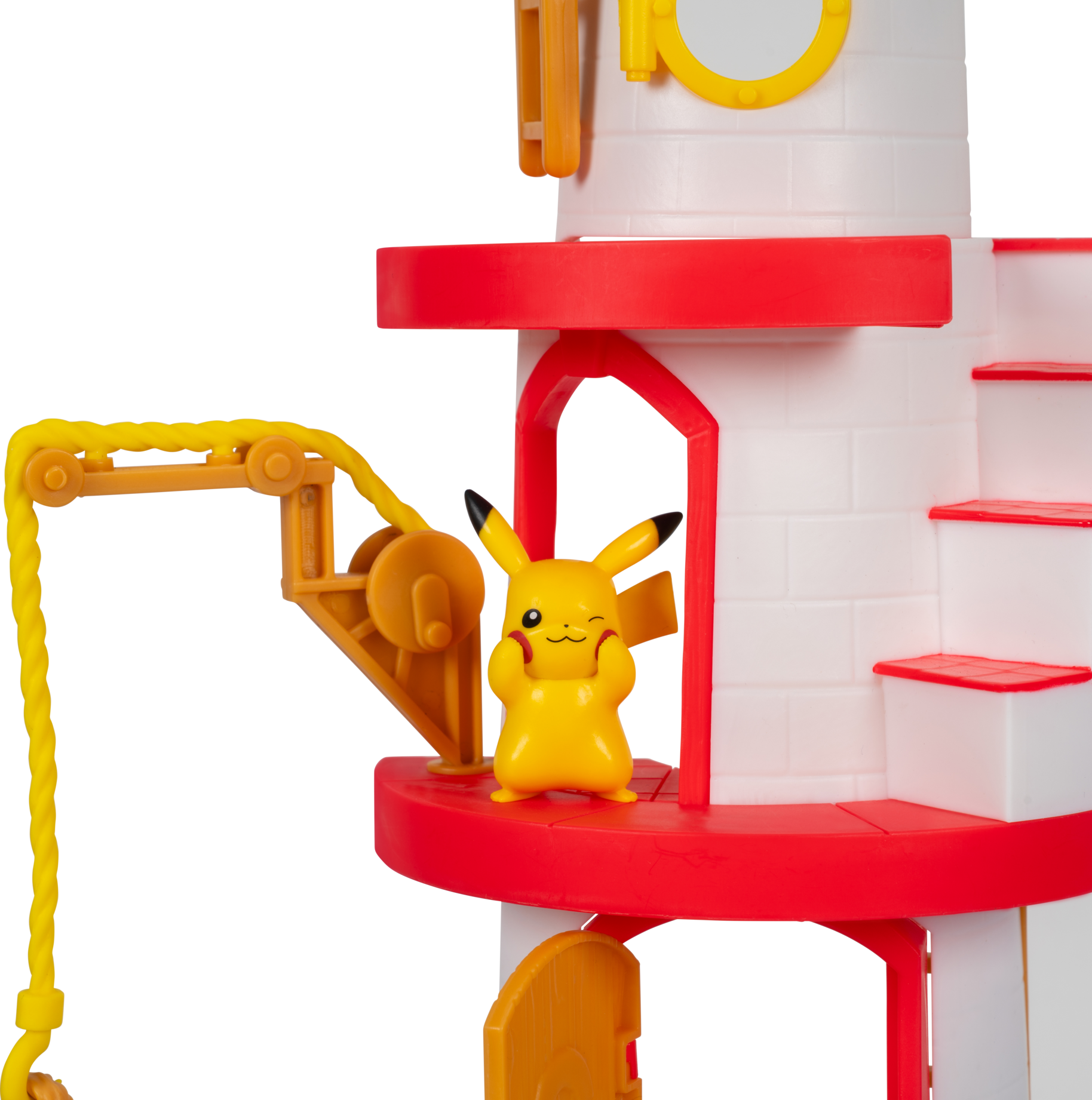
Jazwares Pokémon Carry Case Lighthouse Exploration Playset with Pikachu - Deep-Sea Adventure Playset with 2-Inch Battle FigurePortable playset unfolds from a backpack-style case into a detailed ocean scene centered around a four-storey lighthouse. Includes 2-inch Pikachu Battle Figure and two figure launchers for interactive play. Features rope wall, swinging rock bridge, interior elevator, rope ladder, and working treasure crane. Compatible with other 2-inch Pokémon Battle Figures.34,47 £*Shipping: 3,95 £Secure redirect to the provider
-
Silver Lining Interactive - Interactive Outbound for Nintendo Switch 2 (Disc) - Open-world Exploration and Crafting Adventure - Nintendo Switch 2Explore a colourful open world at your own pace in Outbound, a relaxed open-world exploration and crafting adventure for Nintendo Switch 2. Begin with an empty camper van and gradually transform it into a comfortable, self-sufficient home on wheels. Key features include building and customising your camper van with modular parts, crafting workstations, tools and power supplies from gathered resources, and generating energy using the sun, wind and water. You can also grow crops, plants and mushrooms in your mobile home. Outbound supports solo play or online co-op with up to four players. The game includes the School Bus Adventures downloadable content and digital soundtrack.41,44 £*Shipping: 3,95 £Secure redirect to the provider
-
LightInthebox Men's Dark Gray Hiking Boots, Lace-Up Rugged Outdoor Adventure Style for Men, Trekking, Camping, Mountain Trails and Weekend ExplorationMaterials:Fabric,Suede; Season:Spring,Summer,Fall,Winter,All Seasons; Gender:Men's; Size Suggestion:standard size, select your usual size; Toe Shape:Round Toe; Style:Outdoor,Casual; Outsole Materials:Rubber; Occasion:Daily,Outdoor; Closure...69,99 $*Shipping: 6,99 $Secure redirect to the provider



-
What are relative clauses and conjunctional clauses?
Relative clauses are clauses that provide additional information about a noun in the main clause. They are introduced by relative pronouns such as "who," "which," "that," and "whom." For example, in the sentence "The book that I read is very interesting," the relative clause "that I read" provides more information about the noun "book." Conjunctional clauses, on the other hand, are clauses that are connected to the main clause by conjunctions such as "and," "but," "or," "if," and "because." They can express relationships such as addition, contrast, alternative, condition, and cause. For example, in the sentence "I will go to the park if the weather is nice," the conjunctional clause "if the weather is nice" expresses a condition for the action in the main clause. **
-
What are the French conditional clauses (si-clauses)?
French conditional clauses, also known as si-clauses, are used to express a hypothetical situation and its potential outcome. They consist of two parts: the si clause (if clause), which describes the condition, and the main clause, which describes the potential result. The si clause is typically formed using the conjunction "si" followed by the imperfect tense or the pluperfect tense, while the main clause is formed using the conditional tense. These clauses are commonly used to talk about what would happen in certain situations if a specific condition were met. **
-
How do I transform subordinate clauses into main clauses?
To transform a subordinate clause into a main clause, you need to make sure that the clause can stand alone as a complete sentence. This means adding a subject and a verb to the clause if it doesn't already have them. You may also need to adjust the word order or add any necessary punctuation. Once these changes are made, the subordinate clause will become a main clause that can function independently within a sentence. **
-
How can main clauses and subordinate clauses be recognized?
Main clauses can be recognized by their ability to stand alone as complete sentences, containing a subject and a predicate. Subordinate clauses, on the other hand, cannot stand alone as complete sentences and are dependent on the main clause for their meaning. They often begin with subordinating conjunctions such as "because," "although," "while," or "if." Additionally, subordinate clauses often function as adverbial, adjectival, or nominal clauses, providing additional information about the main clause. **


How can adverbial clauses be used as subordinate clauses?
Adverbial clauses can be used as subordinate clauses to provide additional information about the main clause. They can modify the verb in the main clause by expressing time, place, manner, condition, reason, purpose, or concession. For example, in the sentence "She went to bed after she finished her homework," the adverbial clause "after she finished her homework" provides information about the timing of the main action "She went to bed." Adverbial clauses are introduced by subordinating conjunctions such as after, before, while, since, because, if, although, etc. **
How can subordinate clauses be rewritten as main clauses?
Subordinate clauses can be rewritten as main clauses by removing the subordinating conjunction and making any necessary adjustments to the verb tense or word order. For example, the subordinate clause "because she was tired" can be rewritten as the main clause "she was tired." This transformation allows the subordinate clause to stand alone as a complete sentence. Additionally, any pronouns or other words that were dependent on the subordinating conjunction may need to be adjusted to ensure the new main clause is grammatically correct. **
Top-Angebote
Products related to Clauses:
-
Enesco/Dept 56 More Letters for the Clauses Clothtique Red , RedEvery year, Mr. and Mrs. Claus are eager to receive and read More Letters for the Clauses. The red mailbox has holiday accents including holly leaves, red berries, and a red bow; it is filled with wrapped packages and rolled-up letters. This happy...149,99 $*Shipping: 20,95 $Secure redirect to the provider
-
Enesco/Dept 56 More Letters for the Clauses African American Clothtique Red , RedEvery year, Mr. and Mrs. Claus are eager to receive and read More Letters for the Clauses. The red mailbox has holiday accents including holly leaves, red berries, and a red bow; it is filled with wrapped packages and rolled-up letters. This happy,...149,99 $*Shipping: 20,95 $Secure redirect to the provider
-
Silver Lining Interactive Fishing Game for Nintendo Switch - Fishing Adventure with Upgrades and ExplorationEmbark on a fishing adventure in Azerim with Baelin, the fisherman from Viva La Dirt League's Epic NPC Man universe. When Azerim's heroes disappear and Honeywood comes under threat, this familiar non-player character must become an unlikely adventurer. Fish, explore, and rebuild the village by taking on aquatic enemies through timing-based fishing battles, selecting suitable bait, and learning magical abilities for increasingly challenging catches. Explore forests, coastline, and underwater areas while improving Baelin's rod, line, boat, and other equipment. Key features include battling unusual fish, exploring Azerim, upgrading your gear, and restoring Honeywood. The game also includes a legendary DLC.28,91 £*Shipping: 3,95 £Secure redirect to the provider
-
Jazwares Pokémon Carry Case Lighthouse Exploration Playset with Pikachu - Deep-Sea Adventure Playset with 2-Inch Battle FigurePortable playset unfolds from a backpack-style case into a detailed ocean scene centered around a four-storey lighthouse. Includes 2-inch Pikachu Battle Figure and two figure launchers for interactive play. Features rope wall, swinging rock bridge, interior elevator, rope ladder, and working treasure crane. Compatible with other 2-inch Pokémon Battle Figures.34,47 £*Shipping: 3,95 £Secure redirect to the provider
-
What are conjunctional clauses, relative clauses, demonstrative clauses, and infinitive clauses?
Conjunctional clauses are dependent clauses that are introduced by a conjunction, such as "because," "although," or "while." They provide additional information about the main clause in a sentence. Relative clauses are also dependent clauses that provide more information about a noun in the main clause. They are introduced by relative pronouns like "who," "which," or "that." Demonstrative clauses are dependent clauses that function as adjectives and provide more information about a noun in the main clause. They are introduced by demonstrative pronouns like "this," "that," "these," or "those." Infinitive clauses are dependent clauses that are formed with an infinitive verb (to + base form of the verb). They can function as nouns, adjectives, or adverbs in a sentence. **
-
Are conjunctive clauses always adverbial clauses?
No, conjunctive clauses are not always adverbial clauses. While adverbial clauses are a type of conjunctive clause that function as adverbs to modify verbs, adjectives, or other adverbs, there are also other types of conjunctive clauses. For example, there are conjunctive clauses that function as noun clauses, such as in "I know that you are busy." In this sentence, "that you are busy" is a conjunctive clause functioning as a noun clause, not an adverbial clause. Therefore, conjunctive clauses can serve various grammatical functions beyond just adverbial clauses. **
-
What are relative clauses and conjunctional clauses?
Relative clauses are clauses that provide additional information about a noun in the main clause. They are introduced by relative pronouns such as "who," "which," "that," and "whom." For example, in the sentence "The book that I read is very interesting," the relative clause "that I read" provides more information about the noun "book." Conjunctional clauses, on the other hand, are clauses that are connected to the main clause by conjunctions such as "and," "but," "or," "if," and "because." They can express relationships such as addition, contrast, alternative, condition, and cause. For example, in the sentence "I will go to the park if the weather is nice," the conjunctional clause "if the weather is nice" expresses a condition for the action in the main clause. **
-
What are the French conditional clauses (si-clauses)?
French conditional clauses, also known as si-clauses, are used to express a hypothetical situation and its potential outcome. They consist of two parts: the si clause (if clause), which describes the condition, and the main clause, which describes the potential result. The si clause is typically formed using the conjunction "si" followed by the imperfect tense or the pluperfect tense, while the main clause is formed using the conditional tense. These clauses are commonly used to talk about what would happen in certain situations if a specific condition were met. **
Similar search terms for Clauses
-
Silver Lining Interactive - Interactive Outbound for Nintendo Switch 2 (Disc) - Open-world Exploration and Crafting Adventure - Nintendo Switch 2Explore a colourful open world at your own pace in Outbound, a relaxed open-world exploration and crafting adventure for Nintendo Switch 2. Begin with an empty camper van and gradually transform it into a comfortable, self-sufficient home on wheels. Key features include building and customising your camper van with modular parts, crafting workstations, tools and power supplies from gathered resources, and generating energy using the sun, wind and water. You can also grow crops, plants and mushrooms in your mobile home. Outbound supports solo play or online co-op with up to four players. The game includes the School Bus Adventures downloadable content and digital soundtrack.41,44 £*Shipping: 3,95 £Secure redirect to the provider
-
LightInthebox Men's Dark Gray Hiking Boots, Lace-Up Rugged Outdoor Adventure Style for Men, Trekking, Camping, Mountain Trails and Weekend ExplorationMaterials:Fabric,Suede; Season:Spring,Summer,Fall,Winter,All Seasons; Gender:Men's; Size Suggestion:standard size, select your usual size; Toe Shape:Round Toe; Style:Outdoor,Casual; Outsole Materials:Rubber; Occasion:Daily,Outdoor; Closure...69,99 $*Shipping: 6,99 $Secure redirect to the provider
-
How do I transform subordinate clauses into main clauses?
To transform a subordinate clause into a main clause, you need to make sure that the clause can stand alone as a complete sentence. This means adding a subject and a verb to the clause if it doesn't already have them. You may also need to adjust the word order or add any necessary punctuation. Once these changes are made, the subordinate clause will become a main clause that can function independently within a sentence. **
-
How can main clauses and subordinate clauses be recognized?
Main clauses can be recognized by their ability to stand alone as complete sentences, containing a subject and a predicate. Subordinate clauses, on the other hand, cannot stand alone as complete sentences and are dependent on the main clause for their meaning. They often begin with subordinating conjunctions such as "because," "although," "while," or "if." Additionally, subordinate clauses often function as adverbial, adjectival, or nominal clauses, providing additional information about the main clause. **
-
How can adverbial clauses be used as subordinate clauses?
Adverbial clauses can be used as subordinate clauses to provide additional information about the main clause. They can modify the verb in the main clause by expressing time, place, manner, condition, reason, purpose, or concession. For example, in the sentence "She went to bed after she finished her homework," the adverbial clause "after she finished her homework" provides information about the timing of the main action "She went to bed." Adverbial clauses are introduced by subordinating conjunctions such as after, before, while, since, because, if, although, etc. **
-
How can subordinate clauses be rewritten as main clauses?
Subordinate clauses can be rewritten as main clauses by removing the subordinating conjunction and making any necessary adjustments to the verb tense or word order. For example, the subordinate clause "because she was tired" can be rewritten as the main clause "she was tired." This transformation allows the subordinate clause to stand alone as a complete sentence. Additionally, any pronouns or other words that were dependent on the subordinating conjunction may need to be adjusted to ensure the new main clause is grammatically correct. **
* All prices are inclusive of VAT and, if applicable, plus shipping costs. The offer information is based on the details provided by the respective shop and is updated through automated processes. Real-time updates do not occur, so deviations can occur in individual cases. ** Note: Parts of this content were created by AI.